Mom said it was my turn to write the Squidward EDP review.

Normally, I am not into celebrity perfumes. But when I saw that this man had his own curated fragrance I did far too little research before purchasing and allowed myself the surprise. His coworkers' perfumes, obviously had already sold out, but a few thousand prized bottles of the new Eau Squidward remained and I snagged one with a fervor. I had no intention of writing a review, no intention of drawing attention to what I typically see as a genre typically filled with celebrities past their primes using ghost noses in the fragrance industry to capitalize on our nostalgia. I should not have underestimated him and for that I am truly sorry but have learned so much.
And I am working with a fougère, here. Reminiscent of a thinking man. A man with passions. A man, scorned.
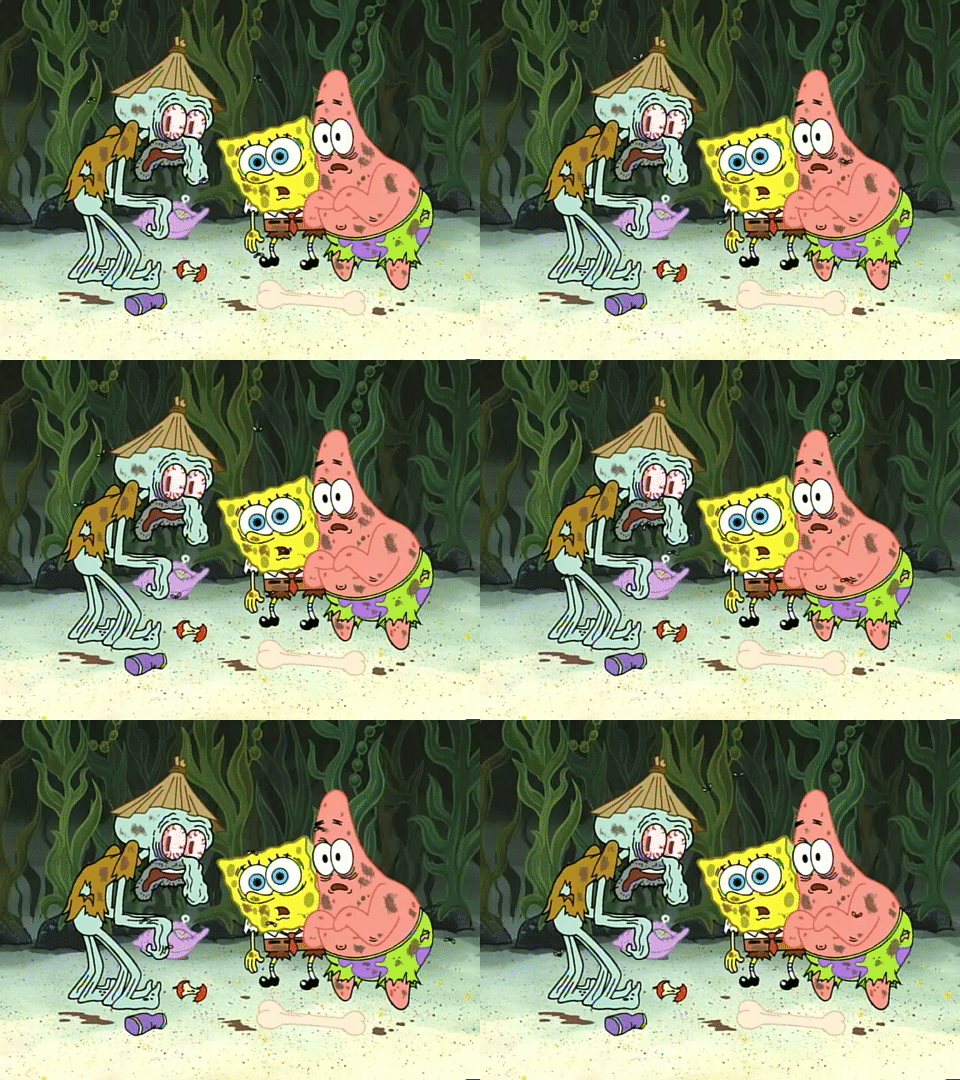
The Squidward Tentacles is a fougère which is no surprise to anyone, knowing the man appreciates class and elegance. I know you know, you know I know, but if someone didn't know, the fougère is a specific green and aromatic olfactory profile with a long, storied history.
On a biochemical basis, the fougère, or 'fern,' works because of the volatility of lavender as a compound, giving an incredibly fresh green and aromatic experience that dies away to the sweeter undertow to the likes of coumarin, oakmoss.
Throughout over a century of development, there have been more riffs on the fougère than stars in the sky but the underlying principle of the name remains the same: if it recalls the fresh, green burst of energy that calls to mind the fern accord, then you are working with a fougère.

It starts out strong, with an almost harsh introduction. At first spray, I was hit with a blast of salt and seawater, astringent and cold. It was the scent of the ocean at dawn, before the sun has had a chance to warm it, before the tourists have descended. It was lonely, and it was demanding attention. I almost coughed. It was a slap in the face with a wet kelp glove. It was a "what do you want?" and an "I'm busy" in olfactory form.
But then, just as I was about to wash it off and call this twelve dollar experiment a failure, it began to change. The sharp, salty edge softened, just a little. A new note emerged from the depths. It was the smell of old books.
The vellum pages of his sheet music, the leather binding of an art history tome, the faint, dusty scent of charcoal and oil paint. It was an intellectual scent, a scent of solitude and concentration. It wasn't a warm, cozy library smell; it was colder, more formal, not just appreciative of history but protective.
The lavender bomb that followed is not for the faint of heart, and that is fine. He is not your friend. He's an artist and this is his art. Raw, enduring, and as uncompromising as he is. Do people really dilute lavender, you can imagine his mockery at the thought. Sit with it. Sit with your discomfort. He challenges you. What is art that does not challenge your core beliefs? What is art that bows to what you already stumble blindly into, believing that it must be true, if not propaganda? This harsh turn reminds you of a world, alive, bold and brash.
There are other clever touches I thought caring and aligned with his values: the wood note is, of course, a reference to his beloved clarinet but is not the aged african blackwood of its external shell. No, and I feel gauche for expecting that to be the case. The reference is sharper. Instead of the clarinet, the woodiness pulls towards the ART of the wood, where the sound is born: the reed. The smell is of the wood shavings he carves away with a blade to get his perfect tone, simultaneously representing refinement of the raw reed to shape, and then creation itself with the first sweet crystalline note he plays.
I think the most telling, moving thing about this perfume is what is NOT in it. There are no fruits. There is no sweetness. There is nothing inviting or crowd-pleasing about it. There is no vanilla, no smooth, hot coffee, no tonka bean to round the edges and make it friendly. It refuses to be comforting. It refuses to be anything other than exactly what it is: miles under an uncaring sea, a lone artist, waiting for his genius to be recognized.
I have worn it three times now. The first time, to see if I liked it. The second time, because I couldn't stop thinking about it. And the third time, because I wanted to. A declaration (certainly not a celebration) of artistic dedication so passionately held that the fire turns to steel, the flame to ice. It is the scent of waiting, the scent of the artist in his tower, a scent that cannot pander to humanity until humanity has raised its collective standards and begs for him.

At the grocery store on my third flirtatious interaction with the Squidward Tentacles, the clerk says, "that one is open," and points to a self-checkout. I nod, distracted by a KitKat when he adds, "I hear it too, you know. The clarion call. The future. The time to come."
I freeze. A man in a tie behind me is impatient. I turn, just enough to see the clerk's face. He looks past me, at a promotional cardboard cutout of a smiling, yellow sponge. There is no recognition in his eyes, no shared joke. He is simply reciting words he has heard.
I grab my bag and leave without another word, my purchases forgotten. This is what his artistry does, it is a contagion. The scent is a portal and I have walked through it not unscathed but with scars that I love. I am not the only one. The only way through, is through the perfume department.
A Conclusion
Tonight, I will put it on again. I will sit in the dark with my window open, letting the cold, lonely, beautiful scent fill the room. I will listen. I will wait for the music to begin. It might not be a clarinet. It might be something else entirely. It might be the sound of my own breath, suddenly sharper in the quiet darkness. It might be the faint, almost imperceptible hum of the world outside. It might be the final, raw, ragged breath of Squidward's Hopes and Dreams.
It's an EDP.